
How Arrest Warrants Work in Fauquier County
Virginia Code section 19.2-72 governs how a Fauquier County arrest warrant begins. A sworn complaint starts the process. A judicial officer examines it under oath. If the officer finds probable cause, the warrant may issue, naming or describing the accused, stating the offense, and directing an arrest with presentation before a judicial officer. The warrant is court process. It directs an arrest. In Fauquier County, a single case can touch a magistrate, a court file, and a serving agency. The agency named in a docket block may differ from the officer who later serves the warrant. Follow the case number and the court, not just the town name.
Fauquier County Arrest Warrant Rules
Fauquier County follows Virginia's issuance statute. Virginia Code section 19.2-72 sets the framework. It requires an oath and a probable-cause examination. For a felony, the written complaint must identify or describe the accused, name the offense, command arrest and presentation before a judicial officer, and carry the issuing official's signature. The linked code page displays the statute's public text, not any person's filled-out warrant record.
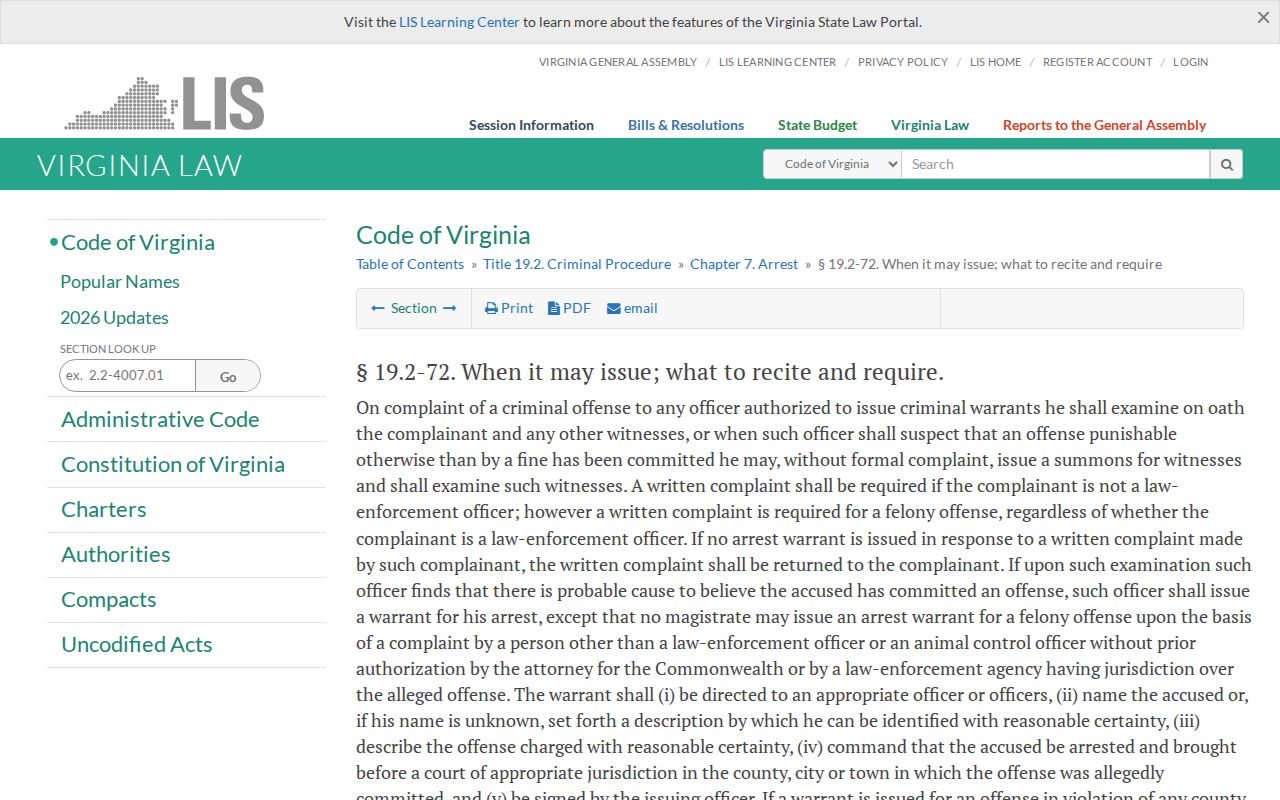
Read the statute for the issuance framework, then ask the responsible Fauquier court about the case record itself.
Arrest Warrants: What They Contain
Virginia's blank DC-312 felony and DC-314 misdemeanor forms show what a Fauquier County warrant record can hold: jurisdiction, complainant, issuing official, case number, offense, Virginia Crime Code, tracking number, hearing details, and execution information. The misdemeanor form also has fields for process as a summons in applicable circumstances. These are blank templates. Not every field appears in OCIS.
| Case number | Court-assigned case number connects process to a file; no local public number format was identified. |
|---|---|
| Issuing details | Court or jurisdiction, issue date, and official signature can identify the process. |
| Charge | Offense description, class, and Virginia Crime Code may be recorded. |
| Hearing | A date and court can direct the next public case inquiry. |
| Execution | Arrest date, officer, badge, agency, and jurisdiction may appear on the return. |
Those descriptor fields do not invite publication of a filled record. Use Fauquier County's official access procedures instead.
Fauquier County Arrest Warrant Forms
Fauquier County's district-court forms split felony from misdemeanor process, and a Circuit capias uses another form entirely. Issue and execution blocks show who signed the paper. They also record what happened at service. Returns can sit apart from docket summaries. The case number and court pull the right file. For DC-312 and DC-314, the official Virginia criminal forms manual is the source. Ask the Fauquier court clerk what portion of a completed form is public and whether a written copy request is needed. The Fauquier Circuit Court page shows the separate felony court and its clerk contact route.
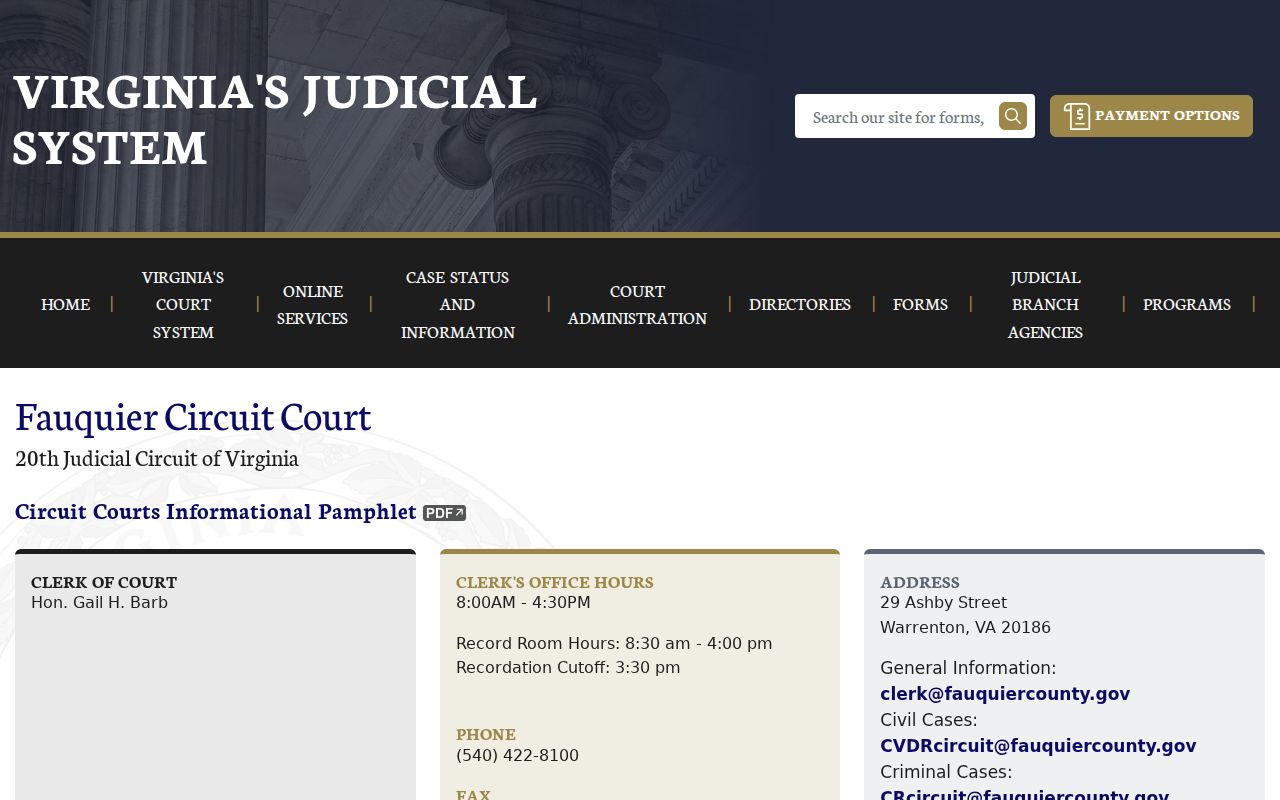
That page helps you find the right clerk. It cannot certify an individual warrant's status in Fauquier County.
How Warrants Get Served in Fauquier County
Service in Fauquier County runs through the Sheriff Warrant/Fugitive Unit, which manages, tracks, and apprehends open warrants and coordinates extraditions within its stated scope. Civil Process/Court Security serves and executes court documents. Local police may arrest too, under valid process. Service can cross town lines under Virginia procedure. After arrest, presentation before a judicial officer must happen without unnecessary delay. Bail or release is decided there. The Fauquier Adult Detention Center books and holds people, though its public custody information is limited and is not a warrant record. Only the court can confirm what process remains outstanding.
Fauquier County Warrant Service Across Towns
The Sheriff's unit page names the Fauquier County Sheriff's Office and the Town of Warrenton Police Department in its warrant work. Remington has town police. Its official page, though, sends officer requests through the County Sheriff non-emergency route. The Plains lists no town department. The county provides its police service. Those gaps explain why an arresting agency, a court location, and a town name may not line up on one record. Fauquier GDC schedules adult town criminal and traffic matters. Circuit handles felony files. The Sheriff Warrant/Fugitive Unit page states the agency's role, and its contact listing is not a name-search tool. Follow the court and case number.
Arrest Warrants, Summonses, and Bench Warrants
These papers lead to different next steps in Fauquier County court. An arrest warrant rides the sworn-complaint and probable-cause route. A summons orders an appearance instead. A bench warrant or capias usually follows a missed date or other court-directed failure. The signed order controls which applies.
| Process | Basis | Typical command |
|---|---|---|
| Arrest warrant | Sworn complaint and probable cause | Arrest and bring before judicial officer |
| Summons | Statutory or court process to appear | Attend on the stated date |
| Bench warrant or capias | Missed appearance or court order | Arrest or appearance under court process |
The later case process determines the outcome.
Fauquier County Arrest Warrant Legal Effect
Probable cause is the issuance standard, nothing more. It is not a verdict on the charge. A Fauquier County record can be described plainly: the warrant concerns a charge, or the docket lists an offense. Access has its own limits. Sealed or criminal-investigative material may stay restricted. Virginia's public-record law and court rules govern release, so redactions or withholding are possible. A public screen may show less than the paper file, and investigative materials can remain closed.
Handling an Arrest Warrant in Your Name
A warrant in your own name is best handled head-on, and Fauquier County gives you a few doors to knock on. For an adult GDC case, call the clerk. Ask what public event shows and whether you must appear or file something in writing. Felony process belongs to the Circuit Clerk instead. The Sheriff can walk you through its operational role. Still, only the court or an authorized judicial officer can recall process or change bond, so no other office in Fauquier County can fix that piece for you.
If an arrest happens, the ADC handles custody and bonding questions by phone. It may point you to Northwestern Regional Jail if a transfer took place. Bond can get someone released while the case stays open. Hang onto the court order or docket update, then check that later records show the action taken.
Important: Speak with a Virginia defense attorney before a voluntary appearance if you believe an arrest warrant may be active.
Fauquier County Warrant Arrest and Court
Virginia Code section 19.2-80 requires a person arrested under warrant or capias to go before a judicial officer without unnecessary delay. That appearance opens the bail or release process. It does not promise immediate release. Nor does it close the case. The statute spells out the court process itself. For custody and bonding details, the Fauquier Adult Detention Center page explains what it can tell you. Ask the responsible clerk about your next Fauquier County court date, and ask counsel about your legal choices.